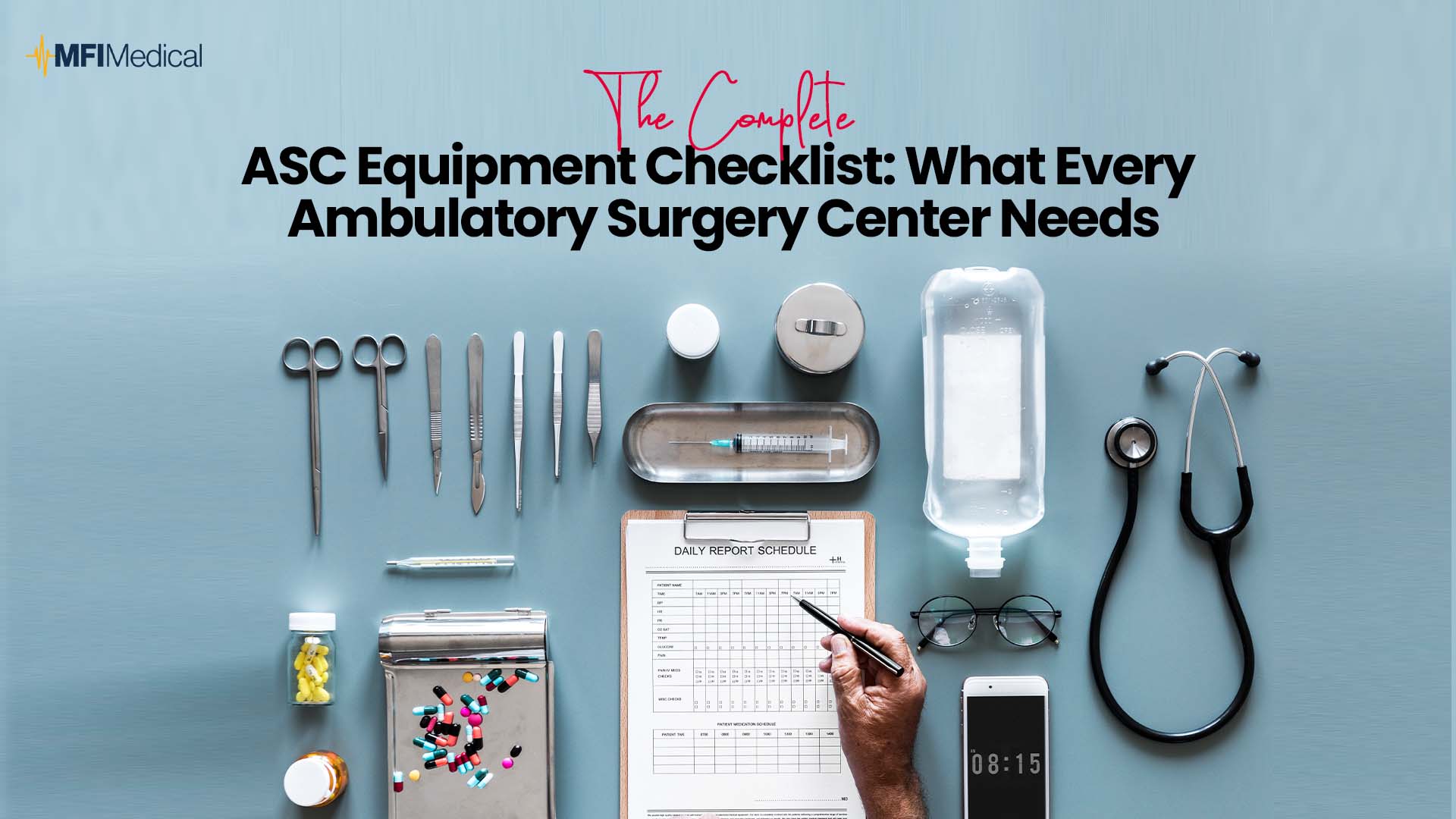
Ambulatory Surgery Centers (ASCs) depend on reliable, right-sized medical equipment to operate efficiently, stay compliant, and deliver excellent patient care. Whether you’re opening a new ASC, expanding services, or refreshing existing rooms, having a clear equipment checklist can save time, reduce costs, and simplify the accreditation preparation process.
This comprehensive ASC equipment checklist covers everything from pre-op intake to PACU, reprocessing, and patient transport—and includes a free printable PDF you can use for planning, inventory control, or inspections.
At MFI Medical, we support ASCs nationwide with upfront wholesale pricing, a Price Match Guarantee, and recently reduced carrier and manufacturer rates—helping your budget go further without compromising quality.
ASC Equipment Checklist — Printable PDF — Download
Essential Equipment Categories Every Ambulatory Surgery Center Must Have
Pre-Op / Intake Equipment
The pre-op area sets the tone for patient safety, efficiency, and workflow. Essential equipment here ensures accurate assessments and smooth patient flow.

-
Vital signs monitor with adult and pediatric cuffs, plus SpO₂
-
Exam or procedure chair/stretcher for intake and assessments
-
Patient scale (wheelchair or bariatric, as required)
-
Hand hygiene station with hands-free faucet, soap, and towels
-
PPE supplies, including gloves, masks, gowns, and sharps containers
-
Diagnostic wall set or mobile diagnostic cart for exams
Procedure Room Essentials
Procedure rooms must support both clinical precision and staff ergonomics while meeting regulatory requirements.

-
Task or exam lighting (ceiling-mounted or mobile)
-
Electrosurgical unit (ESU) with grounding pads
-
Suction system (wall-mounted or portable) with tubing and canisters
-
IV poles and infusion pumps, where applicable
-
Anesthesia or airway cart, if required by procedures
-
Crash cart located nearby per facility policy
-
Adjustable clinician stools for comfort and positioning
Sterilization & Reprocessing Equipment
Proper reprocessing is crucial for ensuring patient safety and compliance with accreditation standards. Every ASC should ensure equipment aligns with manufacturer IFUs and regulatory standards.
-
Autoclave or steam sterilizer, validated and documented
-
Ultrasonic cleaner or washer, as applicable
-
Sterilization packaging: pouches, wraps, chemical & biological indicators
-
Sterilization logbooks, label printers, and cycle printer paper
PACU / Recovery Area
Post-anesthesia care units must be equipped to closely monitor patients and respond quickly if conditions change.

-
Multi-parameter patient monitors (ECG, NIBP, SpO₂, temperature; capnography if required)
-
Oxygen delivery systems (wall-mounted or portable) and suction
-
Patient warming devices, including blanket or IV fluid warmers
-
Privacy curtains or screens, recliners, or recovery stretchers
-
Documentation workstations with nearby power and data access
Patient Transport Equipment
Safe and efficient transport reduces injury risk and improves patient experience throughout the facility.
-
Stretchers or gurneys with side rails and directional locks
-
Transfer aids such as slide boards and step stools
Facility & Compliance Essentials
These items support daily operations, infection control, and survey readiness.
-
Hands-free handwashing sinks and PPE stations
-
Waste management systems for biohazard, sharps, and recycling
-
Emergency equipment, including AEDs and accessible crash carts
-
Label printers and barcode systems for supplies and PM logs
-
Storage solutions with clean/dirty separation, labeled bins, and par levels
-
Clear signage for safety, wayfinding, and patient privacy
High-Velocity Disposables to Stock Consistently
Disposables move fast in ASCs. Keeping the right items on hand prevents delays and costly last-minute orders.
-
Gloves (nitrile or latex), masks, caps, and shoe covers
-
Sterilization pouches, indicators, printer paper, and labels
Ways to Save More with MFI Medical
-
Subscribe & Save (2%) on high-use disposables
How to Use This ASC Equipment Checklist
-
Print the checklist and review it room by room
-
Customize it with specialty-specific equipment
-
Set par levels and label bins to avoid stockouts
-
Confirm power and data locations before installing equipment
-
Maintain sterilization validation records and PM logs for accreditation
Always follow manufacturer IFUs and local regulations. Coordinate electrical and medical gas installations with licensed contractors and your facilities team.
Frequently Asked Questions
1. What size should an ASC exam or procedure room be?
Room dimensions vary by specialty and code. Ensure ADA-accessible routes, proper door clearance, and adequate space for equipment, power, and data connections.
2. How can ASCs prevent stockouts without overbuying?
Set par levels based on weekly usage and lead time, maintain about two weeks of safety stock, and enroll core disposables in Subscribe & Save.
3. What’s the fastest way to reduce supply costs?
Standardize SKUs and request a free invoice audit. MFI Medical can identify equivalent products and better pricing tiers.
4. Can MFI Medical outfit an ASC end-to-end?
Yes. We provide complete room solutions, carts, kits, and bundles—and we’ll match or beat comparable quotes.