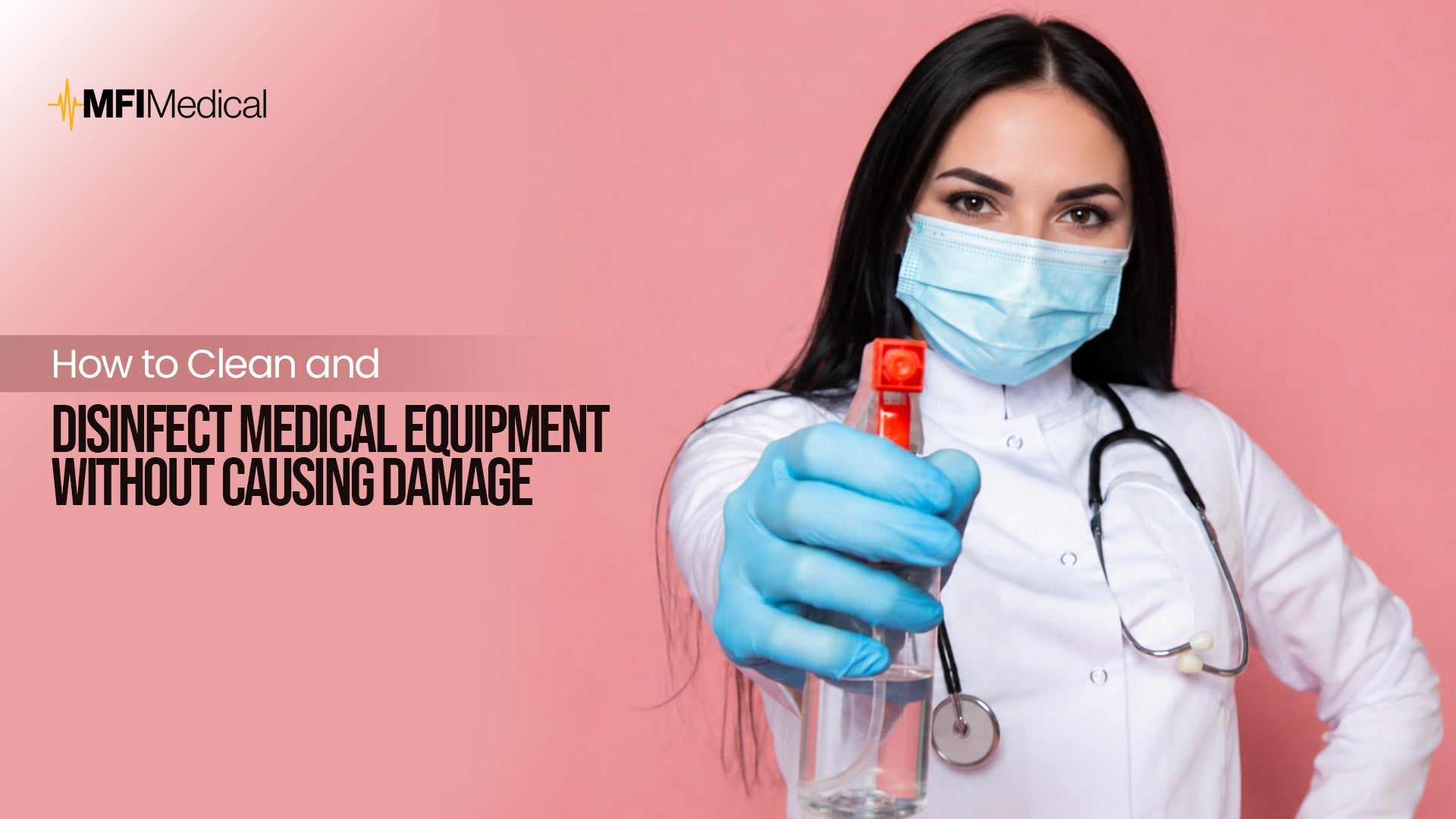
Medical equipment is designed for demanding healthcare environments, but improper cleaning and disinfection can still cause serious damage over time. Cracked plastics, cloudy lenses, peeling labels, touchscreen failures, corrosion, and fluid damage are often caused by using the wrong disinfectant or cleaning method.
This guide explains how to clean and disinfect medical equipment safely without damaging sensitive components. It also covers the best cleaning practices for monitors, medical lights, autoclaves, suction devices, touchscreens, and other common healthcare equipment.
Stock Up on Trusted Cleaning Supplies
Shop Equipment Categories Mentioned in This Guide
Important: Always follow the manufacturer’s IFU (Instructions for Use). This article is educational and should support your facility’s infection control policies.
Why Medical Equipment Gets Damaged During Cleaning
Most equipment damage does not happen because devices are cleaned too often. It usually happens because the wrong chemistry, moisture level, or cleaning technique is used repeatedly over time.
Common causes of damage include:

For example, repeatedly using high-alcohol disinfectants on touchscreens may cause clouding or cracking, while excessive bleach exposure can damage labels, coatings, and metal finishes.
The Safest Cleaning Process for Most Medical Equipment
Most non-critical medical equipment follows the same general cleaning workflow.

Disinfectants work best on clean surfaces. Dirt and organic material reduce their effectiveness, which is why cleaning always comes before disinfection.
Browse disinfectants
Choosing the Right Disinfectant for Medical Equipment
Not every disinfectant is safe for every device. Healthcare teams should always verify compatibility using the equipment IFU.
Commonly safer options for many surfaces


The safest approach is using IFU-approved wipes specifically designed for healthcare equipment.
How to Clean Different Types of Medical Equipment
Different medical devices have different risk areas. Electronics, optics, touchscreens, and fluid pathways all require different cleaning approaches.
A) Cleaning Electronics-Heavy Medical Equipment
Devices with ports, vents, speakers, and touch controls should always be cleaned with minimal moisture.
This category typically includes:
-
Patient monitors
-
ECG/EKG systems
-
Infusion pumps
-
Pulse oximeters
-
Thermometers
-
External cables and leads
Best practices

Shop Related Equipment
B) Cleaning Touchscreens and Control Panels
Touchscreens require extra care because harsh chemicals and abrasive towels can damage coatings quickly.
This category includes:
-
Monitor screens
-
Digital control panels
-
Sterilizer displays
-
Device touch interfaces
Safe cleaning process
-
Remove dust using a microfiber
-
Use IFU-approved screen-safe disinfectant wipes
-
Dry gently with a clean microfiber cloth
Avoid these mistakes
-
Using paper towels
-
Allowing liquid to pool around bezels
-
Using strong solvents unless specifically approved
Shop Related Equipment
C) Cleaning Medical Lights and Optical Surfaces
Lenses, reflectors, and coated optical surfaces can scratch or cloud easily if cleaned incorrectly.
This category includes:
-
Exam lights
-
Procedure lights
-
Surgical light heads
Best practices

Shop Related Equipment
D) Cleaning Suction Equipment and Fluid Pathway Devices
Equipment with internal fluid pathways requires more than simple surface disinfection.
This category includes:
-
Aspiration systems
-
Suction canisters
-
Tubing and filters
-
Drainage reservoirs
Important reminder
Disinfecting the outside of a suction device does not disinfect the internal pathway.
Best practices

Shop Related Equipment
E) Cleaning Stainless Steel Equipment and Hard Surfaces
Stainless steel equipment tolerates disinfectants better than sensitive electronics, but corrosion can still happen with improper chemical use.
This category includes:
-
Equipment stands
-
Rails and handles
-
Stainless housings
-
Carts and brackets
Best practices

F) Cleaning Autoclaves and Sterilizers Safely
Autoclaves and sterilizers should never be treated like standard equipment surfaces.
The sterilization chamber is a controlled system that must be maintained according to the manufacturer’s IFU.
Focus areas for cleaning
-
Handles and touchpoints
-
Control panels
-
Exterior housings
-
Gaskets and seals
Avoid
-
Random chemicals inside the chamber
-
Harsh abrasives on stainless interiors
-
Over-wetting electronic controls
Shop Related Equipment
Common Mistakes That Damage Medical Equipment
Many equipment failures happen because of repeated cleaning errors rather than age.

Recommended Cleaning Schedule

Final Thoughts
Learning how to clean and disinfect medical equipment properly helps healthcare facilities extend equipment lifespan, reduce repair costs, and maintain safer clinical environments.
The safest approach combines proper disinfectants, controlled moisture, gentle cleaning techniques, and strict adherence to manufacturer IFUs.
For clinics, hospitals, and ASCs looking to stock trusted cleaning supplies and healthcare equipment, MFI Medical offers cleaners and disinfectants, patient monitors, sterilizers, suction equipment, medical lights, and more from trusted brands.
Frequently Asked Questions
1. Can I use the same disinfectant wipe on every medical device?
No. Some disinfectants are safe for housing but may damage screens, optics, or coatings. Always follow the equipment IFU.
2. Should I rinse surfaces after disinfecting?
If surfaces become sticky or cloudy, wiping with clean water after the dwell time helps reduce residue buildup.
3. Are bleach wipes safe for medical equipment?
Only if the IFU specifically allows them. Bleach can damage plastics, labels, and metal surfaces over time.
4. How do I clean suction equipment properly?
External surfaces should be disinfected normally, but internal pathways require specific cleaning and maintenance procedures according to the IFU.
5. How often should touchscreens be disinfected?
High-touch screens should be cleaned regularly using screen-safe methods while avoiding excess moisture around edges and ports.